

The New Engine of Energy IoT: LoRaWAN Architecture & 5 Key Application Scenarios
1. Overview
2. What is LoRaWAN?
LoRaWAN is a low-power, long-range wireless communication protocol designed specifically for the Internet of Things (IoT). Functioning like a “private highway” for energy data, it provides a reliable connectivity solution for the intelligent upgrading of energy management across various scenarios during the digital transformation journey.
Core Advantages:
- Ultra-Long Range: Covers 2–5 km in urban environments and up to 15–20 km in line-of-sight conditions, easily meeting the large-scale deployment needs of parks and factories.
- Flexible Deployment: Based on unlicensed frequency bands, it supports rapid private network construction without complex wiring, enabling seamless integration with existing systems.
- Cost-Effective: Eliminates the need for SIM cards and monthly carrier fees, resulting in lower hardware and long-term O&M costs compared to 4G/NB-IoT solutions.
- Deep Integration: Seamlessly fuses with energy management platforms to support intelligent functions such as automatic meter reading, real-time monitoring, fault,and energy efficiency analysis.
Developed to address common industry challenges—such as difficult retrofitting, poor coverage, high costs, and slow expansion—LoRaWAN has emerged as the ideal choice for upgrading the Energy Internet of Things.
3. Five Key Application Scenarios
Leveraging its long-range, low-power, wire-free, and easy-to-deploy characteristics, LoRaWAN is widely applied in the following energy IoT scenarios to drive digital management and energy efficiency:
1. Smart Parks
- Functionality: Achieves sub-item energy consumption monitoring, equipment status collection, intelligent lighting, and security linkage across the entire park.
- Benefit: Enhances overall operational efficiency and safety levels.
2. Smart Buildings
- Functionality: Suitable for office buildings, shopping malls, and residential complexes. It enables collection and control of electricity, water, gas, air conditioning, and lighting data without wall-breaking wiring.
- Benefit: Facilitates building energy conservation and refined operations.
3. Smart Factories
- Functionality: Monitors production line energy consumption, power distribution safety, and environmental parameters in real-time. Supports energy efficiency analysis, fault ,and predictive maintenance.
- Benefit: Provides a reliable data foundation for the digital transformation of manufacturing.
4. Smart Cities
- Functionality: Applied in municipal projects such as smart street lighting, environmental monitoring, and remote meter reading.
- Benefit: Promotes visual and refined management of urban energy, supporting the realization of “Dual Carbon” goals.
5. Schools & Hospitals
- Functionality: Implements electrical monitoring, prepaid management, and electrical safety in laboratories, wards, dormitories, etc.
- Benefit: Improves energy usage safety and management efficiency.
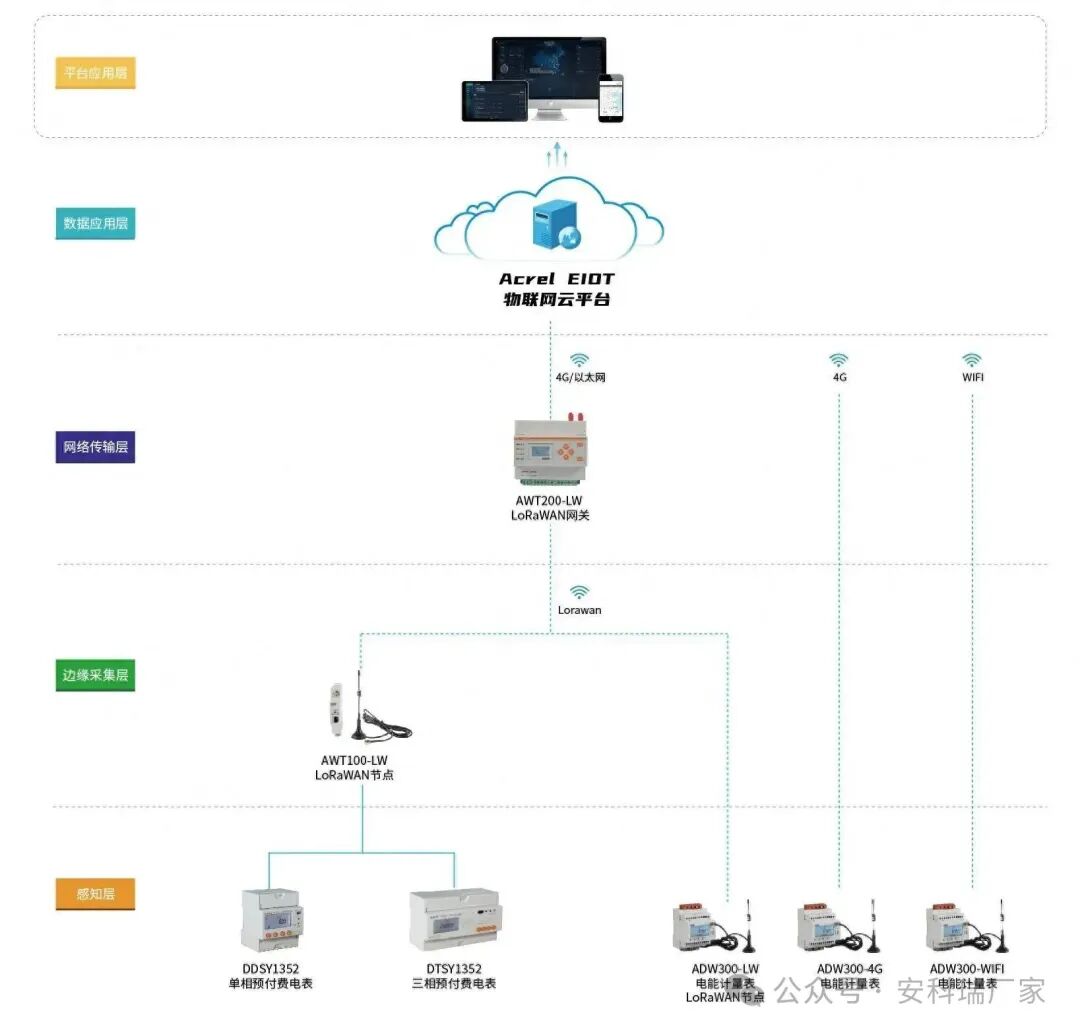
4. Networking Solution
1. Terminal Layer (Nodes)
- Devices: LoRaWAN nodes such as the AWT100-LW and ADW300-LW.
- Role: Responsible for on-site data collection.
2. Network Layer (Gateways)
- Role: Acting like “base stations,” they receive data from nodes and upload it to the platform via LoRaWAN.
3. Platform Layer (Server)
- Role: Completes data aggregation, analysis, alarm management, and visualization.
5. Scenario-Based Solutions
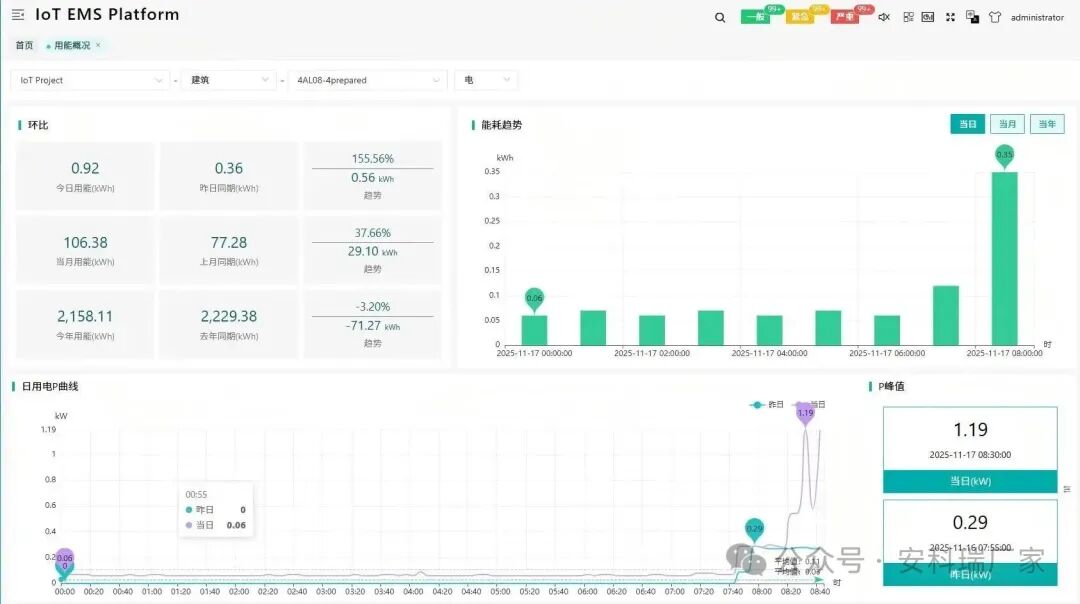
Energy Metering
- Features: Supports real-time collection and measurement of multi-energy data (electricity, water, gas, etc.). Enables long-term data storage, trend tracking, and abnormal energy consumption warm.
- Value: Provides data support for energy management, operational optimization, and energy conservation. Helps enterprises identify potential energy-saving opportunities, optimize resource allocation, and improve overall energy efficiency.
Wireless Temperature Measurement
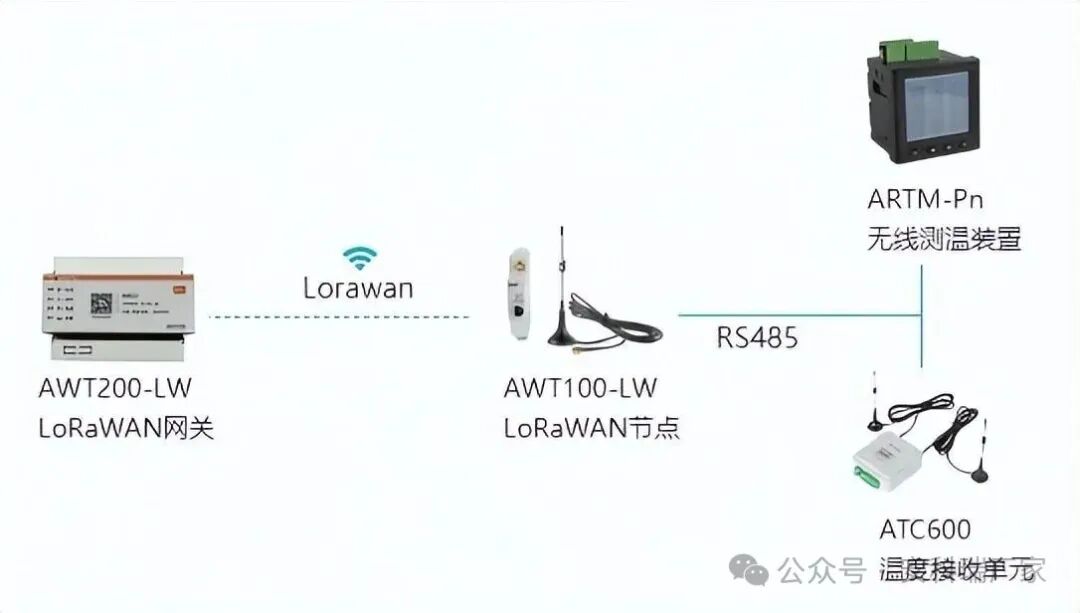
- Features: The ARTM series of online temperature monitoring devices is suitable for temperature monitoring of cable joints, circuit breaker contacts, knife switches, high-voltage cable intermediate joints, dry-type transformers, and low-voltage high-current equipment in high and low voltage switchgear.
- Value: Enhances equipment safety and protection.
Post time: Jan-19-2026


